CITTERN 10 strings
“The cittern is a plucked string instrument that seems to have appeared around the 15th century and is still prevalent in Europe. The archiciter is a cittern with an added series of bass strings. Inheritor of the citole, the cittern experienced two periods of intense popularity:
The longest lasted from the early 16th to the mid-17th century. During this time, it acquired characteristics that are still its own today. At this point, the practice of the cittern is close to that of the lute but of a lower status, more popular and simpler. Amateurs practice it diligently, and there are numerous collections available to them. However, around the mid-17th century, for no apparent reason, it fell into obscurity
In 1770, it resurfaces. This time, there is a genuine enthusiasm from the public, and to meet the demand, composers will compete with imagination, to the point that the quality of production suffers. One maker even conceived of adapting a small mechanical table from a pianoforte with small hammers activated through a keyboard.
However, this evolution only harms the cittern, for which interest wanes by 1800.”
source: Wikipedia article
Nowadays, the cittern is experiencing a resurgence of interest.
What is known as the Portuguese guitar is actually a type of cittern, as is the Corsican Cetera.
The model I offer has five courses, with three scale lengths, according to needs and tuning.
The short scale is 54.5 cm, the medium 59 cm, and the long 63 cm.
The body is very similar to that of the bouzouki,
“the standard tuning follows that of the mandolincello plus the octave E string: C-G-D-A-E or less commonly D-G-D-A-E, or F-C-G-D-A.
The so-called ‘Irish’ tuning: two tunings depending on the size of the instrument. Long instrument: D-G-D-A-D. Short instrument: G-D-A-D-A;
open tuning: G chord: D-G-D-G-D or G-D-G-D-G or D chord: D-A-D-A-D or A-D-A-D-A.”
It is an instrument that is suitable for both chordal and melodic playing, or a blend of both.
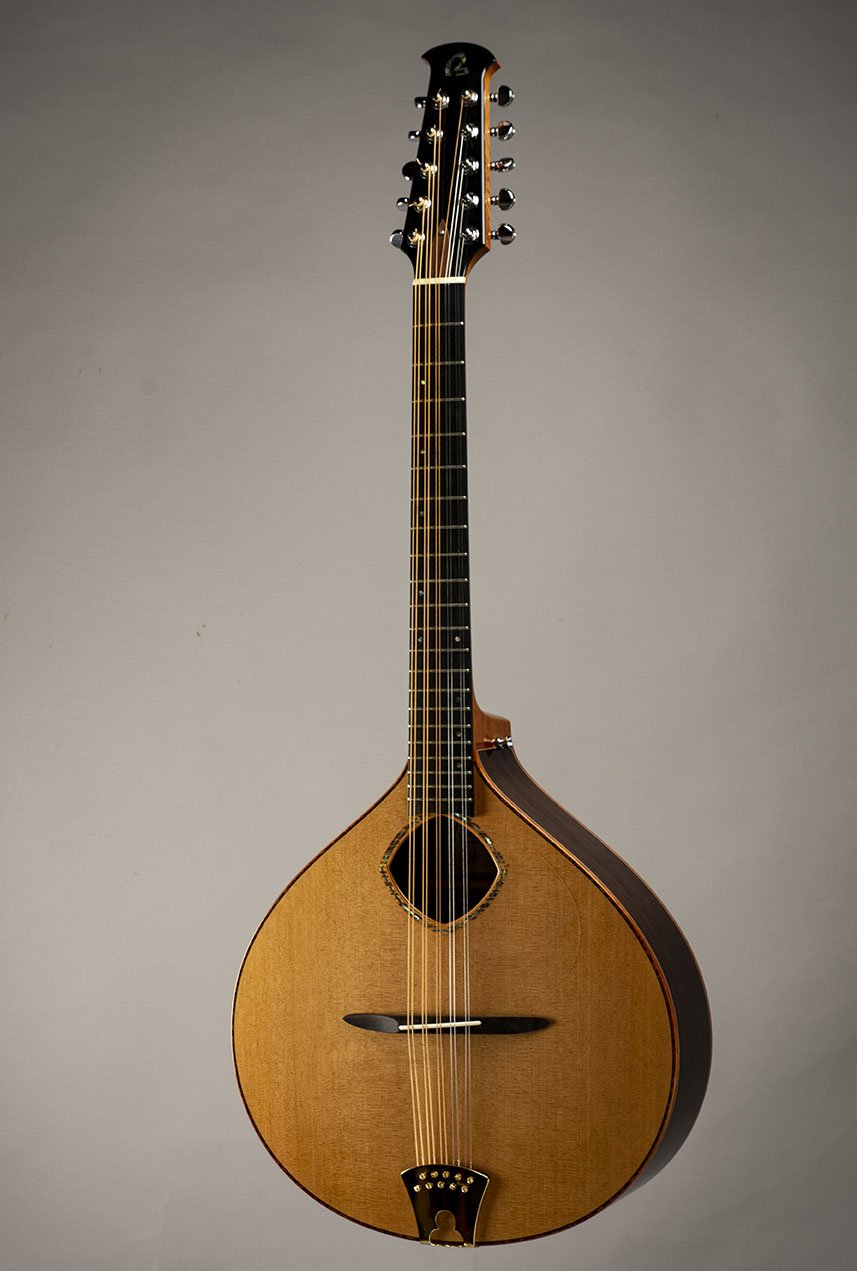
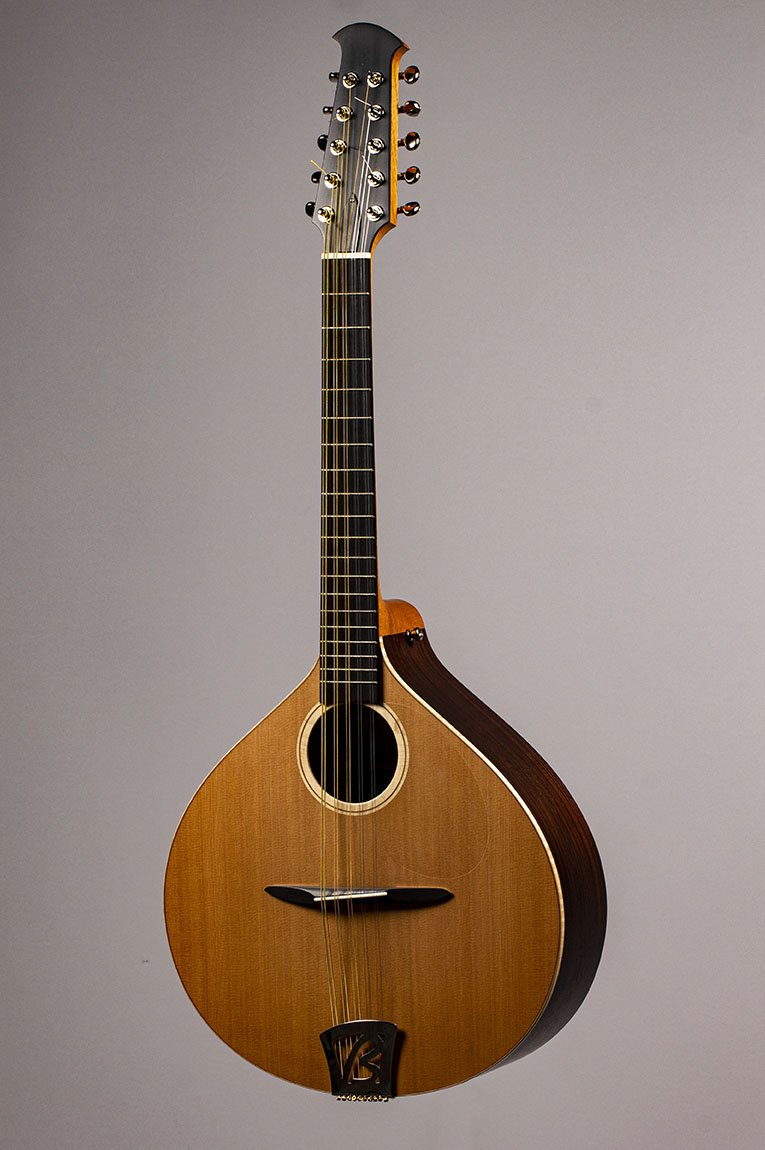
Two different models: “Banshee” Model and “Tara” Model.
These two models have equivalent acoustic qualities and woods. They differ in decoration (binding, wood, varnish), with the “Tara” being more understated (less decorated) than the “Banshee.”
I make these instruments with three scale lengths to choose from: 63 cm, 59 cm, 54.5 cm.
The scale length is closely related to the chosen tuning, which will determine the gauge of strings to be used.
Depending on your physique and playing style, you can choose the model from this range that suits you best.
SPECIFICATIONS OF THE TWO MODELS:
“TARA” MODEL:
Soundboard binding only
Simple rosette
Matte varnish with open pores
Different back and
sides wood
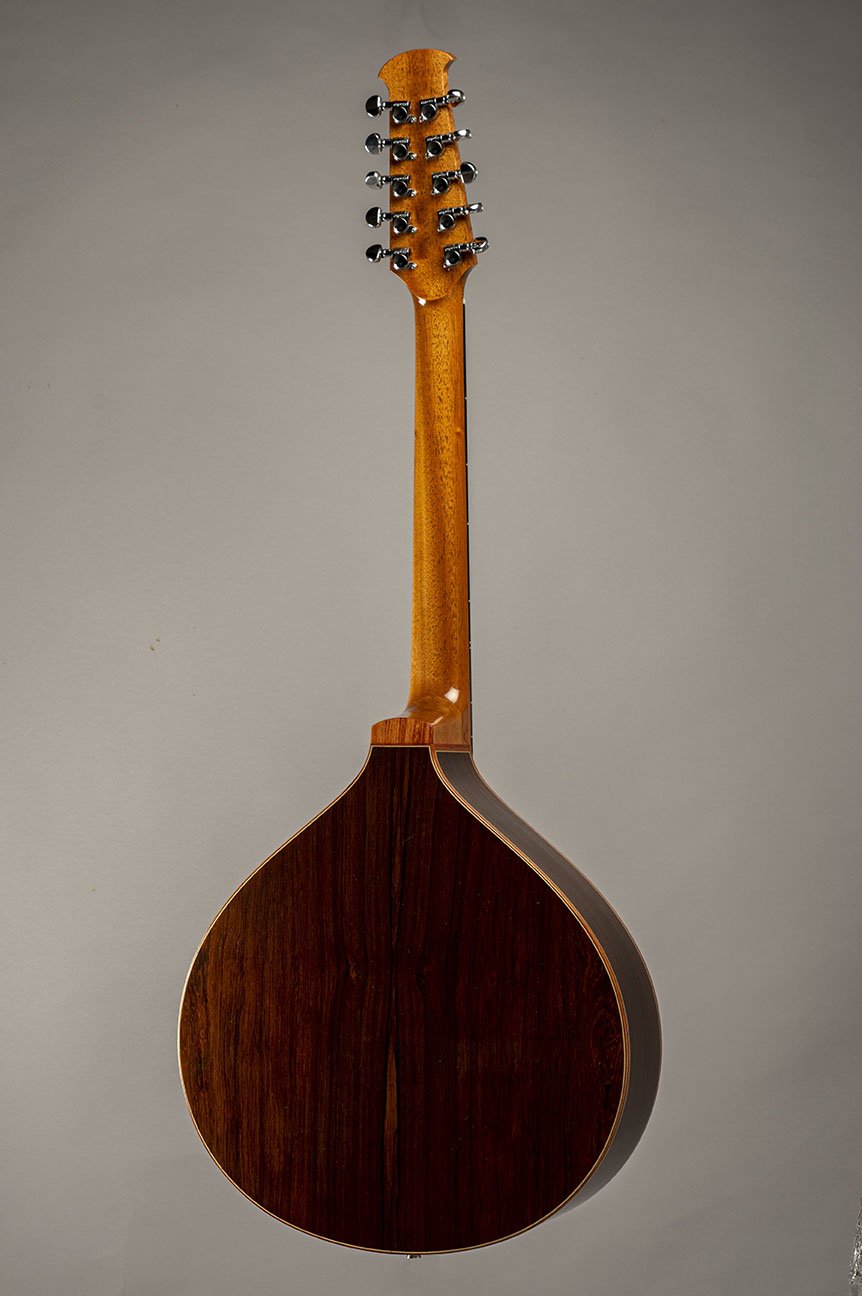
“BANSHEE” MODEL:
Full binding
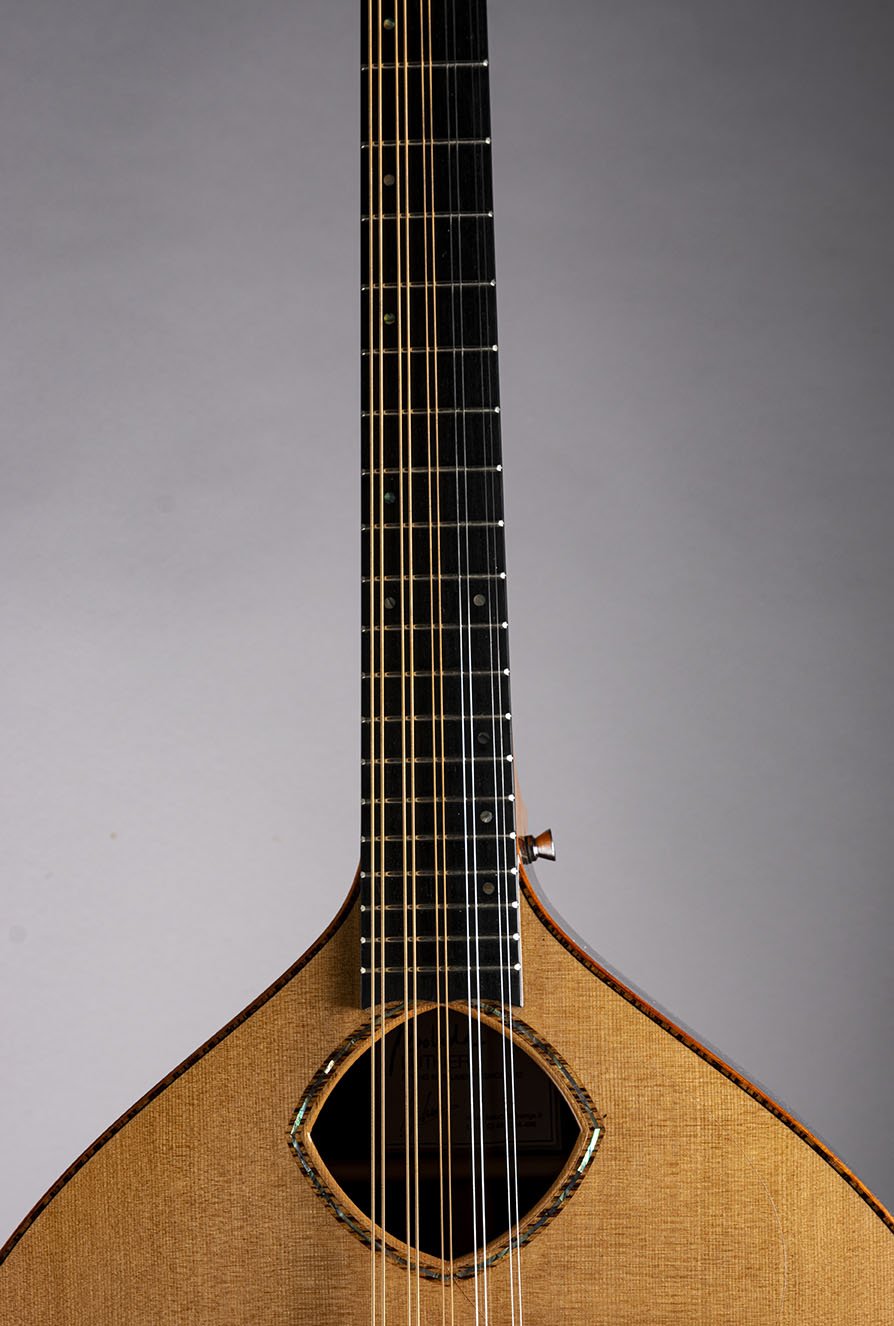
Decorative rosette
Rosewood for the back
and sides
Glossy varnish
The rosette choice is available at no extra cost for both models, round or diamond-shaped (instrument from the videos above).
The headstock is an option that can be added to the order.